

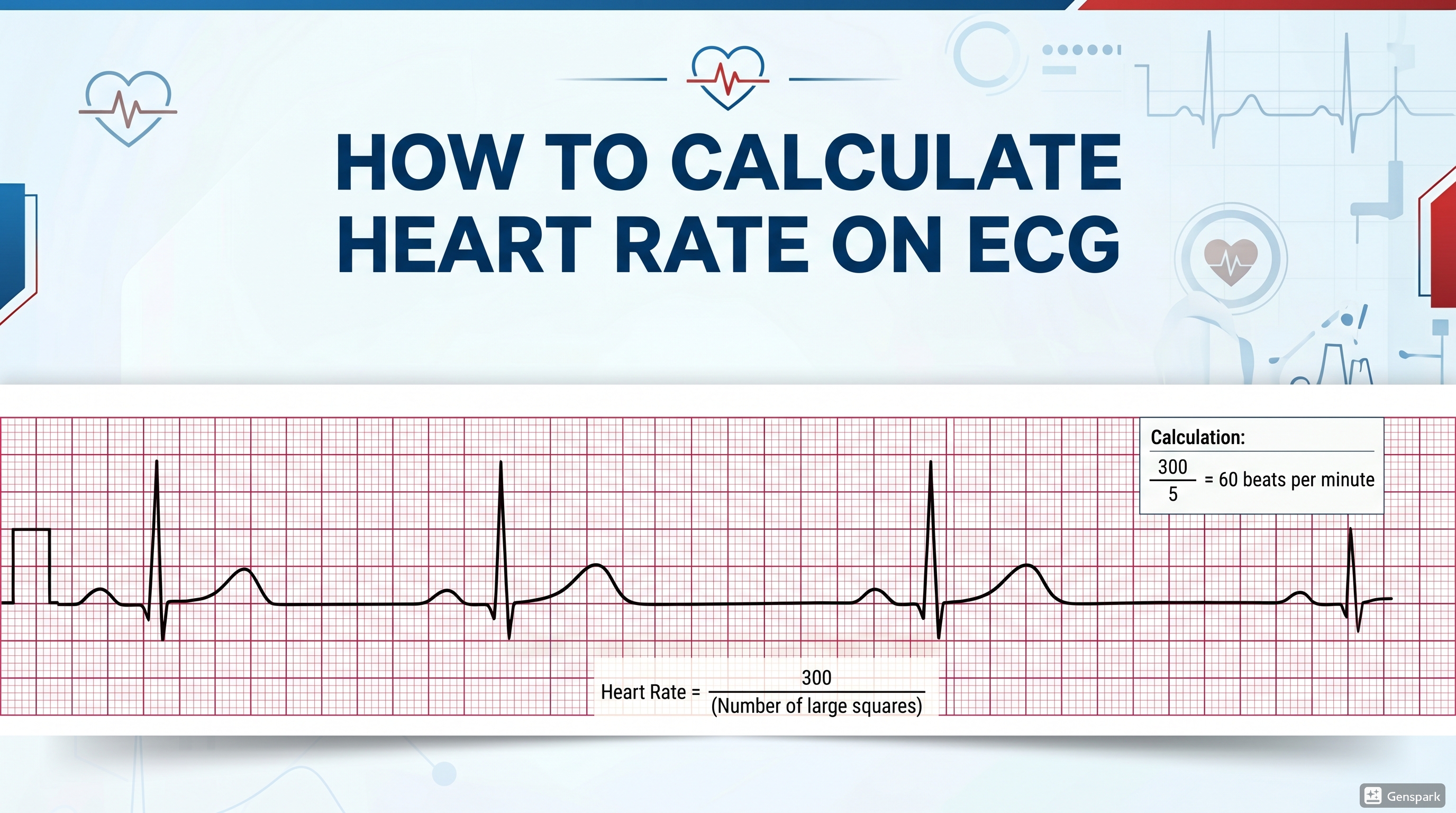
How to Calculate Heart Rate on ECG
Meta description: Learn how to calculate heart rate on ECG using the 300 rule, 1500 rule, and 6-second method. A practical guide for regular and irregular rhythms.
Quick Answer
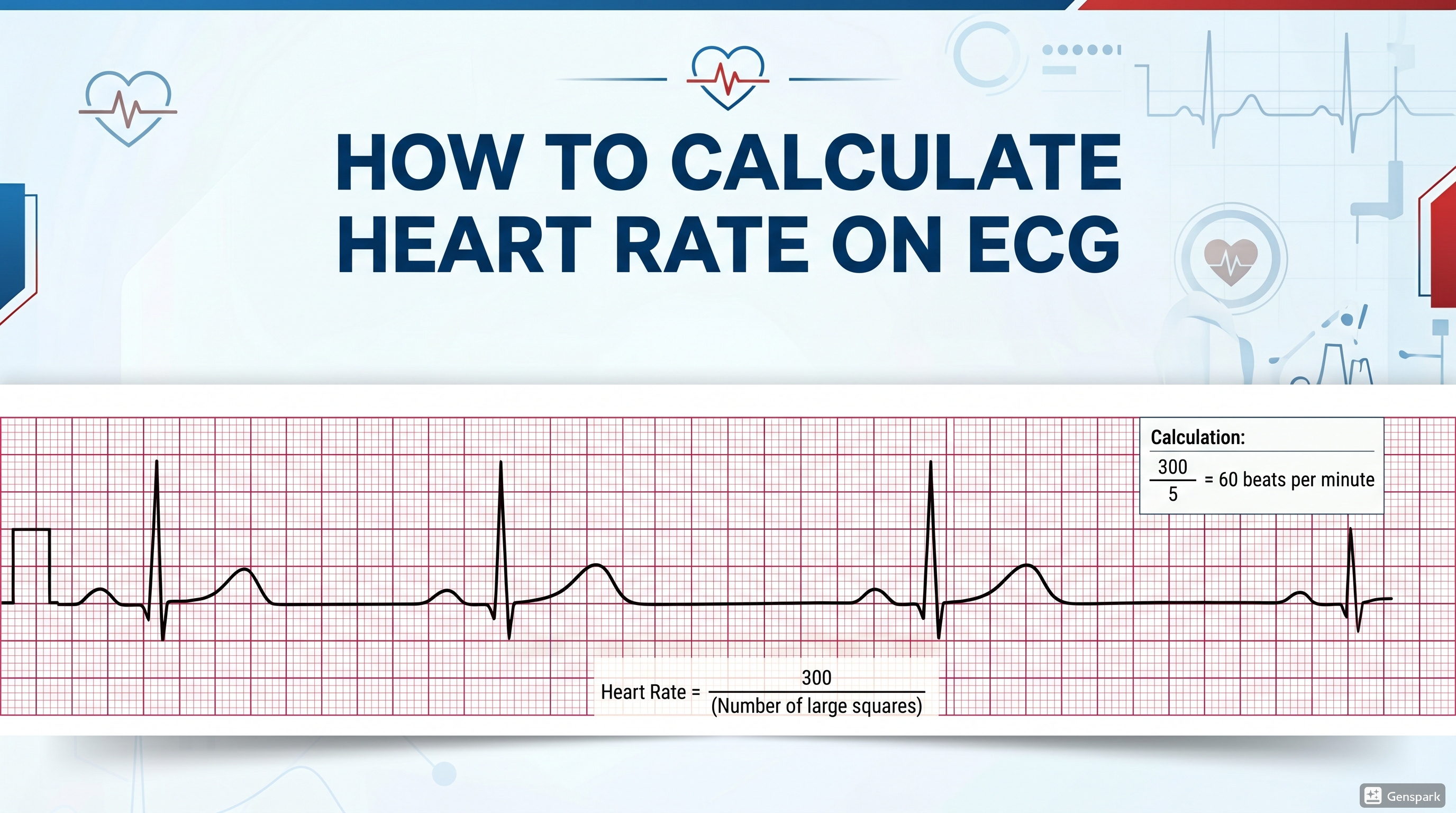
To calculate heart rate on ECG, first decide whether the rhythm is regular or irregular. In a regular rhythm, use the 300 rule by dividing 300 by the number of large squares between two R waves, or use the 1500 rule by dividing 1500 by the number of small squares between R waves. In an irregular rhythm, count the number of QRS complexes in a 10-second strip and multiply by 6. These methods are fast, practical, and clinically useful when interpreted in context.
Introduction
One of the first practical ECG skills every medical student and junior doctor should learn is how to calculate heart rate quickly and correctly. It sounds simple, but in real clinical settings it matters a great deal. A heart rate that is clearly too fast, too slow, regular, or irregular can change your differential diagnosis, your urgency, and your immediate management.
The good news is that ECG heart rate calculation is not difficult once you understand the paper speed and use the right method for the rhythm in front of you. The most common mistake is not math. It is choosing the wrong method for the wrong tracing. Regular rhythms and irregular rhythms should not be handled exactly the same way.
This article gives a step-by-step guide to calculating heart rate on ECG using the most practical clinical methods: the 300 rule, the 1500 rule, and the 6-second or rhythm-strip method. It is written for medical students and junior doctors, but it is also structured to work well as a high-yield teaching review.
What an ECG Can Tell You About Heart Rate
An electrocardiogram records the electrical activity of the heart. It can show how fast the heart is beating, whether the rhythm is steady or irregular, and how electrical signals move through the atria and ventricles. That is why heart rate on ECG is not just a number; it is part of the larger interpretation of rhythm and conduction.
Before calculating the rate, always look at the tracing globally. Is the rhythm regular or irregular? Are the QRS complexes narrow or wide? Are there visible P waves? A correct heart rate is useful, but it becomes much more useful when interpreted within the full ECG pattern.
Step 1: Check the Paper Speed
Standard ECG paper speed is usually 25 mm per second. At this paper speed, the grid has a very useful time structure:
- 1 small square = 0.04 seconds
- 1 large square = 0.20 seconds
- 5 large squares = 1 second
- 30 large squares = 6 seconds
- 300 large squares = 60 seconds
- 1500 small squares = 60 seconds
These facts explain why the common heart rate formulas work. If the ECG was recorded at a different paper speed, your calculation must be adjusted. For beginners, always confirm the speed before you start counting.
Step 2: Decide if the Rhythm Is Regular or Irregular
This is the key decision point. If the R-R intervals are evenly spaced, the rhythm is regular and you can use methods based on a single R-R interval. If the R-R intervals vary significantly, the rhythm is irregular and an average-rate method is usually safer.
A very common error is trying to apply the 300 rule to a clearly irregular rhythm such as atrial fibrillation. That produces a misleading number because each beat occurs at a different interval. In irregular rhythms, use the rhythm-strip counting method instead.
Method 1: The 300 Rule for Regular Rhythms
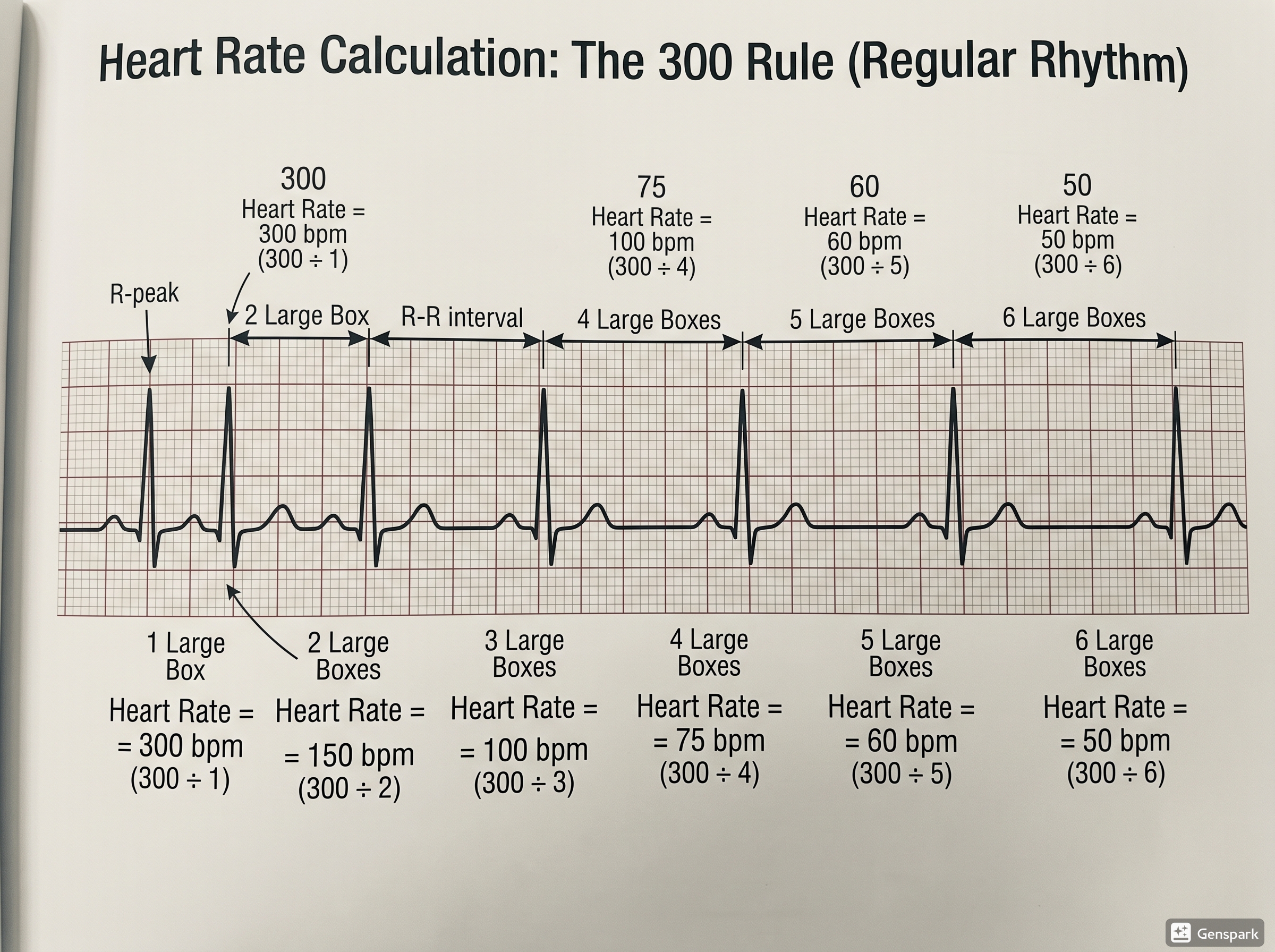
The 300 rule is the fastest bedside method for calculating heart rate in a regular rhythm. Count the number of large squares between two consecutive R waves, then divide 300 by that number.
Formula: Heart rate = 300 ÷ number of large squares between R waves
Examples:
- 1 large square = 300 bpm
- 2 large squares = 150 bpm
- 3 large squares = 100 bpm
- 4 large squares = 75 bpm
- 5 large squares = 60 bpm
- 6 large squares = 50 bpm
This is why many clinicians memorize the sequence 300, 150, 100, 75, 60, 50. It allows very fast estimation without formal calculation. The 300 rule is especially useful in sinus rhythm and other regular narrow-complex rhythms.
Method 2: The 1500 Rule for More Precise Regular Rhythm Calculation
The 1500 rule is more precise than the 300 rule because it uses small squares instead of large squares. Count the number of small squares between two consecutive R waves, then divide 1500 by that number.
Formula: Heart rate = 1500 ÷ number of small squares between R waves
Examples:
- 10 small squares = 150 bpm
- 15 small squares = 100 bpm
- 20 small squares = 75 bpm
- 25 small squares = 60 bpm
This method is useful when the rhythm is regular and you want a more exact answer, especially in tachycardias where the R-R interval spans only a few large squares. For teaching purposes, it is worth knowing both the 300 and 1500 rules, even if you use the 300 rule more often in daily practice.
Method 3: The 6-Second or Rhythm-Strip Method for Irregular Rhythms
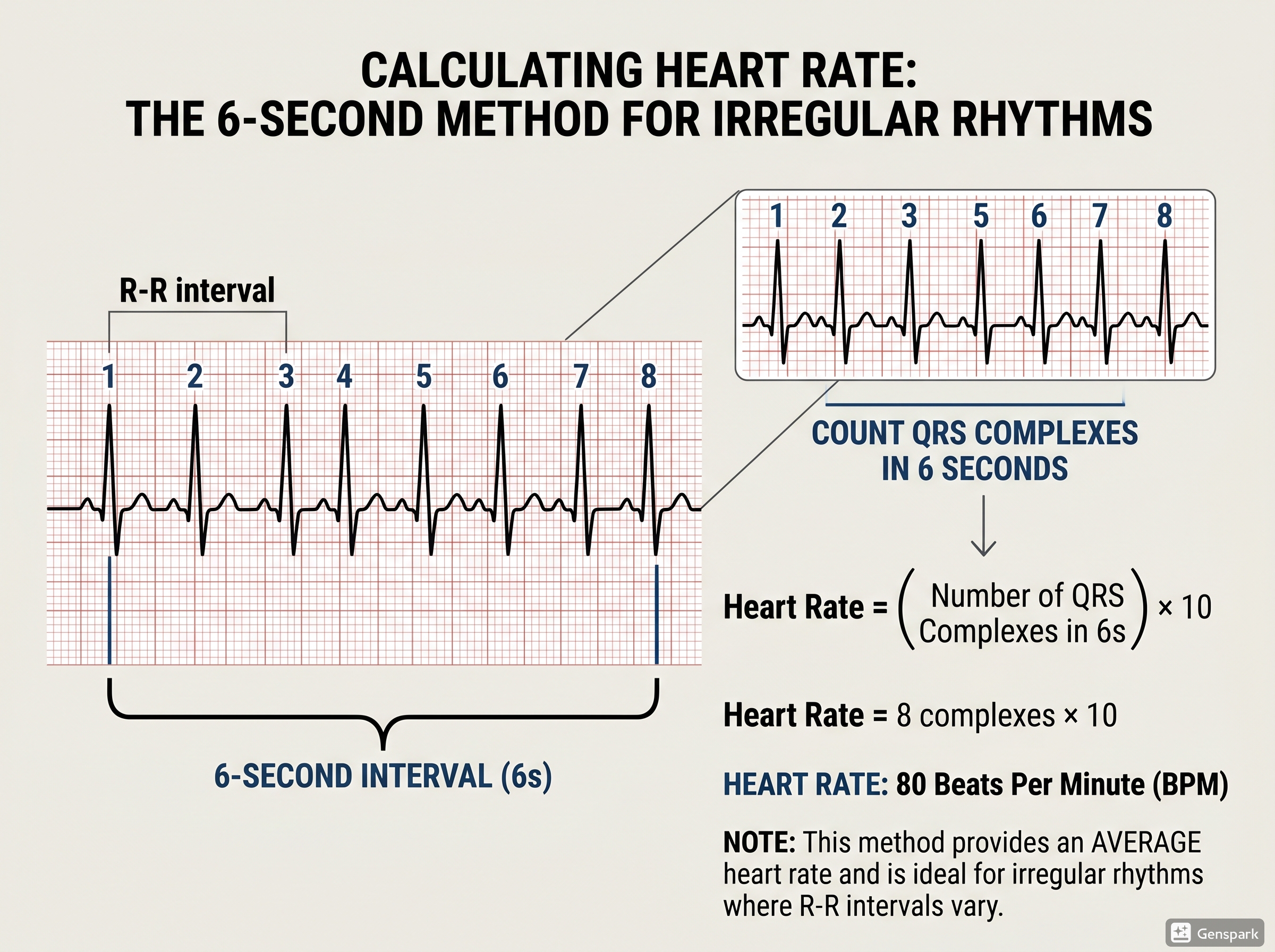
When the rhythm is irregular, the safest quick method is to calculate the average heart rate over a longer strip. On a standard 10-second rhythm strip, count the number of QRS complexes and multiply by 6. Some teaching resources also describe a 6-second strip method and multiply by 10. The principle is the same: count beats over a known time and convert to beats per minute.
On a standard 10-second strip: Heart rate = number of QRS complexes × 6
On a true 6-second strip: Heart rate = number of QRS complexes × 10
This method is most useful in rhythms such as atrial fibrillation, where beat-to-beat intervals vary. It gives an average rate rather than the rate of a single beat.
Which Method Should You Use?
- Use the 300 rule for a quick estimate in regular rhythms.
- Use the 1500 rule when the rhythm is regular and you want more precision.
- Use the rhythm-strip counting method for irregular rhythms.
If you remember only one principle, remember this: regular rhythms are best measured beat-to-beat, while irregular rhythms are best measured as an average over time.
Normal Heart Rate on ECG
In most adult clinical settings, a normal resting heart rate is usually taken as about 60 to 100 beats per minute. Some ECG teaching resources use 50 to 100 bpm in adult interpretation, while rhythm-focused bedside teaching often uses 60 to 100 bpm as the classic normal range. Clinical context matters. Well-trained athletes may sit below this range, while pain, fever, anxiety, pregnancy, dehydration, and sepsis can all raise the rate.
Worked Example: Regular Rhythm
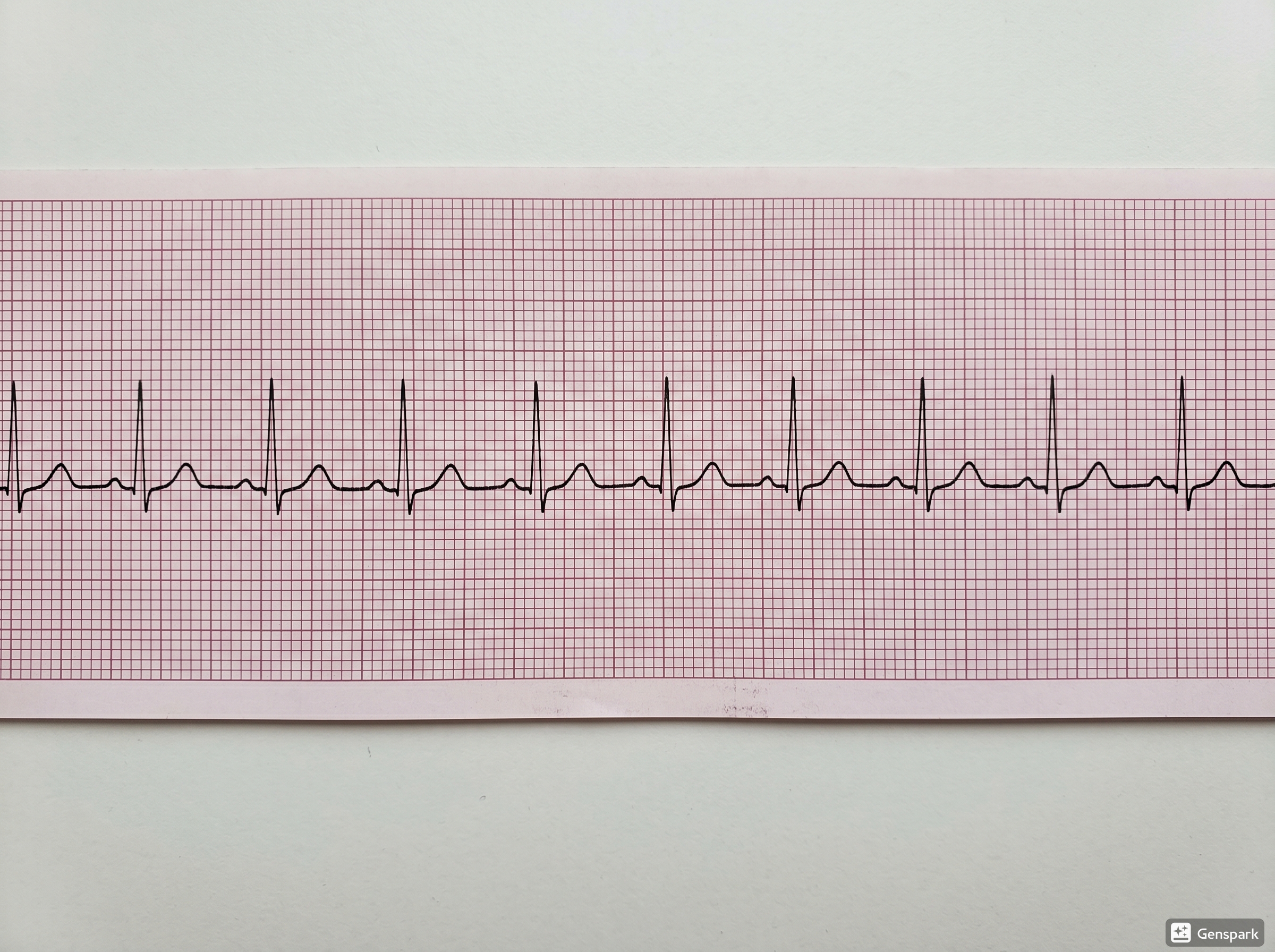
Imagine the R-R interval spans 4 large squares. Using the 300 rule: 300 ÷ 4 = 75 bpm. If you count 20 small squares between R waves, using the 1500 rule gives 1500 ÷ 20 = 75 bpm. Both methods agree, which is what you would expect in a regular rhythm.
Worked Example: Irregular Rhythm
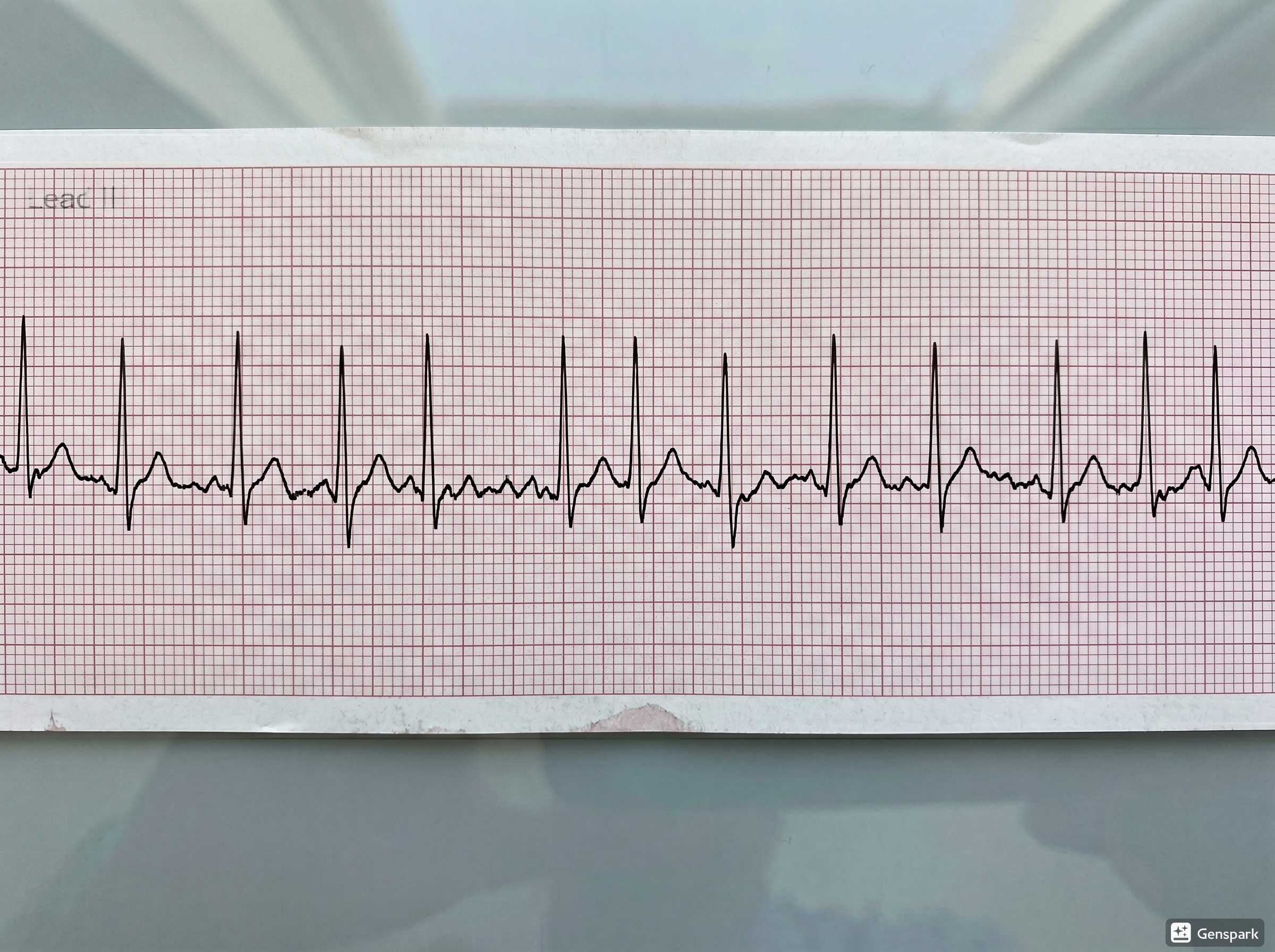
Imagine you are looking at a 10-second rhythm strip with 12 QRS complexes. Multiply 12 by 6, which gives an average rate of 72 bpm. If the rhythm is irregularly irregular, this average is much more useful than trying to calculate rate from one arbitrary R-R interval.
How to Present Heart Rate in a Clinical ECG Readout
When you present an ECG, try to give heart rate together with rhythm description. For example: “Regular narrow-complex rhythm at 75 bpm” or “Irregularly irregular rhythm with an average ventricular rate of about 110 bpm.” That style is more clinically useful than stating the number alone.
Common Beginner Mistakes
The most common mistake is using the 300 rule in an irregular rhythm. The second common mistake is forgetting to check the paper speed. Another frequent problem is counting the wrong deflection, especially when the tracing is noisy or the QRS is broad.
Students also sometimes try to be too exact too early. In real practice, a fast and correct estimate is usually more valuable than a slow calculation that delays the overall interpretation. The important thing is to pick the right method for the rhythm.
A Practical Memory Aid
For regular rhythms, memorize the sequence: 300, 150, 100, 75, 60, 50. For irregular rhythms, remember: count the QRS complexes over the rhythm strip and convert to one minute.
- Regular rhythm = 300 rule or 1500 rule
- Irregular rhythm = count complexes over time
- Always check paper speed first
FAQ
How do you calculate heart rate on a regular ECG rhythm?
Count the number of large squares between two R waves and divide 300 by that number, or count the small squares and divide 1500 by that number.
How do you calculate heart rate on an irregular ECG rhythm?
Count the number of QRS complexes on a standard 10-second rhythm strip and multiply by 6. If you are using a true 6-second strip, multiply by 10.
What is the 300 rule in ECG?
The 300 rule is a quick bedside method for regular rhythms. Heart rate equals 300 divided by the number of large squares between R waves.
What is the normal adult heart rate on ECG?
In most adult clinical settings, a normal resting heart rate is generally around 60 to 100 bpm, although some ECG teaching sources use 50 to 100 bpm for adult interpretation.
Which heart rate calculation method is best?
No single method is best in every situation. The best method depends on whether the rhythm is regular or irregular. For regular rhythms, the 300 or 1500 rule is ideal. For irregular rhythms, the rhythm-strip method is more reliable.
Key Takeaways
Calculating heart rate on ECG is easy once you use a structured approach. First confirm the paper speed, then decide if the rhythm is regular or irregular. Use the 300 rule or 1500 rule for regular rhythms, and use the rhythm-strip counting method for irregular rhythms.
For medical students and junior doctors, the main goal is not just to get a number. It is to combine the rate with rhythm interpretation so that the ECG becomes clinically useful. If you do that consistently, heart rate calculation becomes fast, accurate, and meaningful.
References
- American Heart Association. Electrocardiogram (EKG or ECG).
- LITFL. ECG Rate Interpretation.
- LITFL. ECG Rhythm Evaluation.
- ECG Waves. How to Interpret the ECG: A Systematic Approach.